
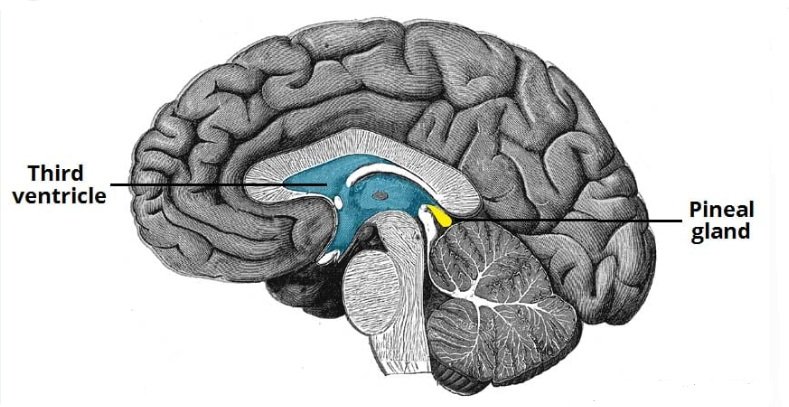

The pineal gland is a small, pea-sized gland deep in the center of your brain. Its main job is to produce melatonin, the hormone that:
- Regulates your sleep–wake cycle (circadian rhythm)
- Helps you fall asleep and stay asleep
- Responds to light and darkness (more melatonin at night, less during the day)
- Plays a role in seasonal rhythms, mood, and puberty timing
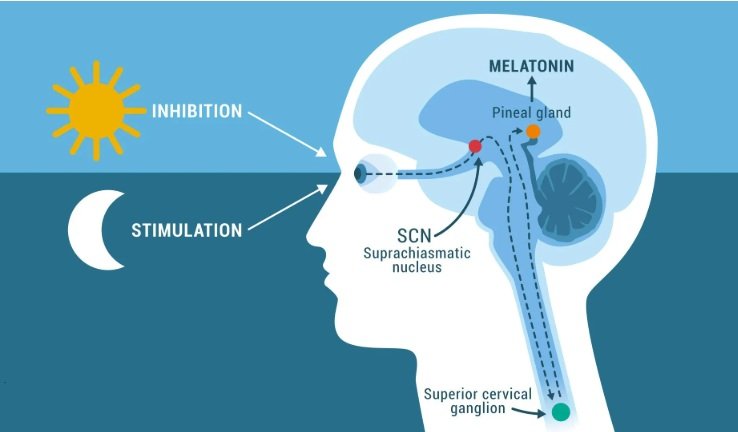
When light hits your eyes, it signals the pineal gland to slow melatonin production. When it’s dark, the gland ramps it up—basically telling your body, “Hey, it’s time to rest.”
Beyond biology (where things get interesting):
Across ancient cultures and spiritual traditions, the pineal gland has been called the “third eye.” It’s associated with:
- Intuition and inner awareness
- Imagination and visualization
- Dreams and altered states of consciousness
- A sense of spiritual connection or insight
Philosophers like Descartes even believed it was the “seat of the soul” because it sits right at the brain’s center and isn’t duplicated like most brain structures.
The modern crossover:
Science acknowledges that the pineal gland can calcify with age, and research shows this may affect melatonin output—potentially influencing sleep quality and mental clarity. This is why it’s often discussed in both wellness and spiritual health conversations.
In short:
- 🧠 Body: regulates sleep, hormones, and biological rhythms
- 🌙 Mind: influences dreams, mood, and mental clarity
- ✨ Spirit (traditionally): linked to intuition and higher awareness
Holistic Support
Natural tips and products to nurture your pineal gland daily.
1. How to keep your pineal gland healthy (the practical stuff)
Sleep is king 👑
The pineal gland thrives on rhythm.
- Go to bed and wake up at consistent times
- Sleep in real darkness (blackout curtains help)
- Avoid bright screens 1–2 hours before bed (blue light suppresses melatonin)
Light hygiene matters more than people realize
- Get natural sunlight in your eyes (no sunglasses) within 30–60 minutes of waking
- Dim lights at night → warm, low lighting tells your pineal gland “it’s night now”
Nutrition basics
These support melatonin production and brain health:
- Magnesium (leafy greens, cacao, mineral water)
- Zinc (pumpkin seeds, meat, oysters)
- Tryptophan-rich foods (eggs, turkey, seeds)
- Antioxidants (berries, herbs, clean water)
Stress reduction
Chronic stress messes with melatonin.
- Breathwork, meditation, prayer, or slow drumming rhythms (👀 drummer advantage)
- Even 5–10 minutes daily helps
2. What “pineal calcification” actually means 🧪
From a scientific view:
Calcification = calcium deposits forming in the pineal gland over time. This is very common and increases with age.
Research suggests it may be associated with:
- Reduced melatonin production
- Lighter, more fragmented sleep
- Disrupted circadian rhythm
Important reality check:
Calcification is not automatically bad, and it doesn’t mean your pineal gland “shuts down.” Many people function just fine—but optimizing pineal health can improve sleep quality and mental clarity.
Things often discussed as contributors (some debated):
- Chronic stress
- Poor sleep habits
- Lack of sunlight
- Aging
- Environmental factors (this is where opinions diverge)
3. Can you “decalcify” it?
Scientifically proven reversal?
Not conclusively.
What is supported by evidence:
- Improving sleep cycles can increase melatonin output
- Reducing oxidative stress supports brain tissue health
- Lifestyle changes can improve pineal function even if calcification remains
So the smarter framing is:
Optimize pineal function, not obsess over removing calcium.
That said, many people report subjective benefits (clearer dreams, deeper sleep, intuition) when they focus on pineal-supportive habits.

4. The science ↔ spirituality overlap ✨
This is where things get fascinating.
- The pineal gland sits exactly between the brain’s hemispheres
- It’s involved in dreaming and altered states
- Melatonin is chemically related to compounds involved in vivid dreams and inner imagery
Ancient traditions didn’t have MRIs—but they noticed:
- Darkness + stillness = insight
- Rhythmic sound + meditation = altered awareness
- Dreams = messages, symbols, intuition
So while science talks hormones and rhythms, spirituality talks:
- Inner vision
- Intuition
- Connection beyond linear thinking
Different languages. Same center.
5. Simple daily pineal-support ritual (no woo required)
Morning:
- Sunlight in eyes
- Set intention for the day
Day:
- Hydrate
- Reduce overstimulation when possible
Evening:
- Dim lights
- No screens late
- 5 minutes of slow breathing or meditation
Night:
- Dark, cool room
- Let your brain do what it’s built to do
Awaken Now
Start your journey to clearer mind and balanced sleep with natural pineal support.